

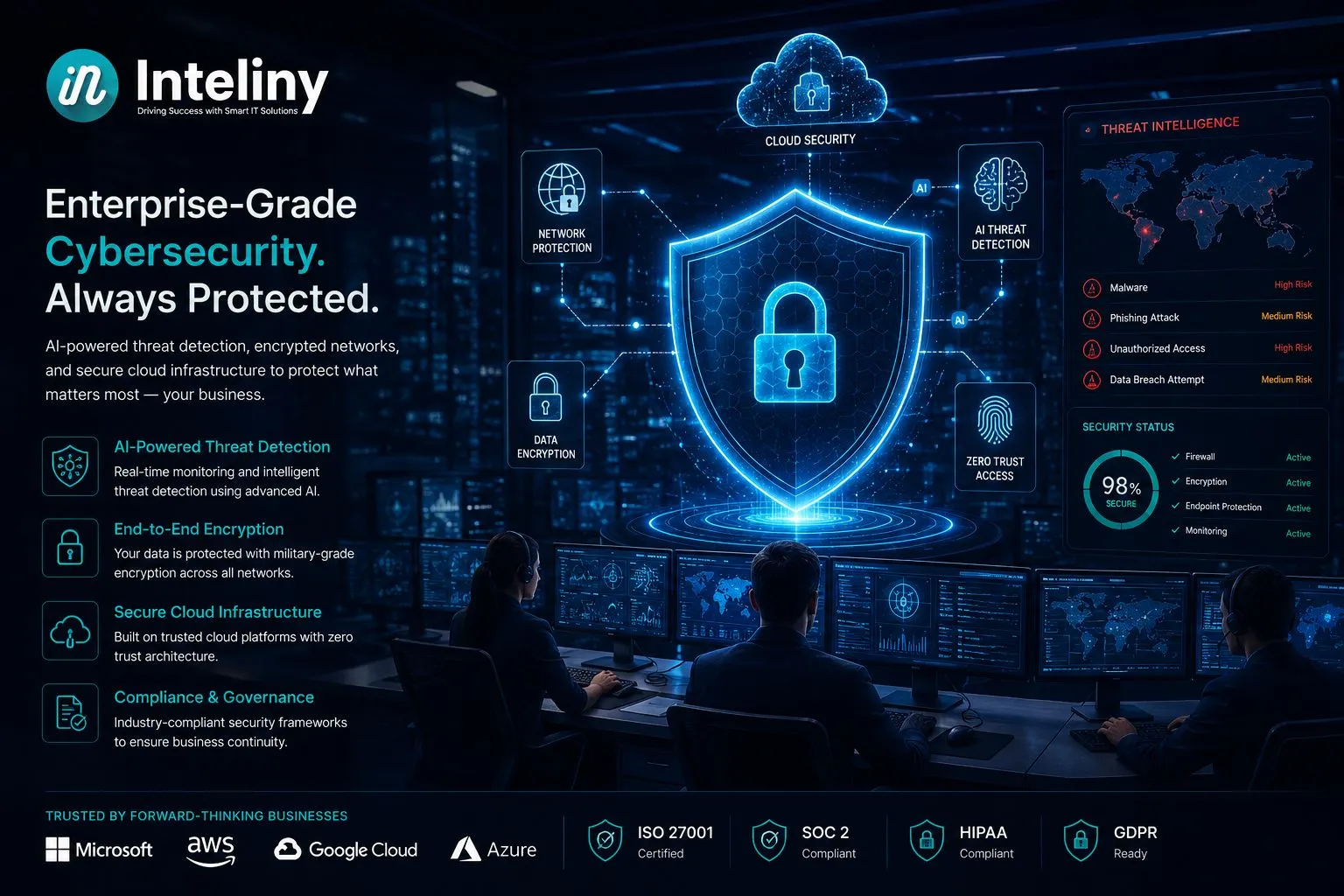

Introduction to Cybersecurity for Businesses
Cybersecurity is a critical aspect of modern business operations. As technology advances, so do the threats to your digital assets. In 2026, it's more important than ever to prioritize cybersecurity. But what does that entail? In this comprehensive guide, we'll explore the world of cybersecurity, covering topics such as ransomware, phishing, endpoint security, zero trust, employee awareness, cloud security, compliance, business continuity, incident response, and more.
Cyber Threats: Understanding the Risks
Ransomware: A Growing Concern
Ransomware is a type of malware that encrypts a victim's files, demanding a ransom in exchange for the decryption key. This can be devastating for businesses, resulting in significant financial losses and damage to reputation. According to recent statistics, ransomware attacks have increased by over 150% in the past year alone.
Phishing: The Most Common Cyber Threat
Phishing is a social engineering technique used to trick individuals into revealing sensitive information, such as passwords or credit card numbers. This can be done through email, phone, or text message. Phishing attacks are becoming increasingly sophisticated, making them harder to detect.
Endpoint Security: Protecting Your Devices
What is Endpoint Security?
Endpoint security refers to the practice of protecting endpoint devices, such as laptops, desktops, and mobile devices, from cyber threats. This can be achieved through a combination of software, hardware, and best practices.
Implementing Endpoint Security Measures
To protect your endpoint devices, it's essential to implement robust security measures, including firewalls, antivirus software, and intrusion detection systems. Regular software updates and patches are also crucial in preventing vulnerabilities.
Zero Trust: A New Approach to Cybersecurity
What is Zero Trust?
Zero trust is a security model that assumes that all users and devices, whether inside or outside the network, are potential threats. This approach requires continuous verification and monitoring of all interactions with the network.
Benefits of Zero Trust
The zero trust model provides several benefits, including improved security, reduced risk, and increased visibility. By verifying all interactions, you can prevent lateral movement and reduce the attack surface.
Employee Awareness: The Human Factor in Cybersecurity
The Importance of Employee Awareness
Employees are often the weakest link in the cybersecurity chain. A single mistake, such as clicking on a phishing email, can compromise the entire network. Therefore, it's essential to educate employees on cybersecurity best practices and phishing attacks.
Training and Awareness Programs
Implementing regular training and awareness programs can help employees understand the risks and consequences of cyber threats. This can include phishing simulations, security workshops, and online courses.
Cloud Security: Protecting Your Data in the Cloud
Cloud Security Risks
Cloud security risks include data breaches, unauthorized access, and data loss. To mitigate these risks, it's essential to implement robust cloud security measures, such as encryption, access controls, and monitoring.
Cloud Security Best Practices
Cloud security best practices include using strong passwords, enabling two-factor authentication, and regularly updating software and patches. It's also essential to choose a reputable cloud service provider that prioritizes security.
Compliance and Regulatory Requirements
Understanding Compliance Requirements
Compliance requirements vary depending on the industry and location. It's essential to understand the relevant regulations, such as GDPR, HIPAA, and PCI-DSS, and implement measures to ensure compliance.
Consequences of Non-Compliance
Non-compliance can result in significant fines, reputational damage, and legal action. Therefore, it's crucial to prioritize compliance and regularly review and update policies and procedures.
Business Continuity and Incident Response
Business Continuity Planning
Business continuity planning involves developing strategies to ensure the continuation of business operations in the event of a disaster or cyber attack. This includes identifying critical functions, developing backup plans, and implementing disaster recovery procedures.
Incident Response Planning
Incident response planning involves developing procedures to respond to cyber attacks and minimize damage. This includes identifying incident response teams, developing communication plans, and implementing containment and eradication procedures.
Cybersecurity Checklist for Businesses
- Conduct regular risk assessments
- Implement robust security measures, such as firewalls and antivirus software
- Develop and enforce strong password policies
- Provide regular employee training and awareness programs
- Develop a business continuity plan and incident response plan
Common Questions
What is the most common cyber threat?
Phishing is the most common cyber threat, accounting for over 90% of all cyber attacks.
How can I protect my business from ransomware?
To protect your business from ransomware, implement robust security measures, such as firewalls and antivirus software, and develop a backup and disaster recovery plan.
What is the importance of employee awareness in cybersecurity?
Employee awareness is critical in cybersecurity, as employees are often the weakest link in the cybersecurity chain. Educating employees on cybersecurity best practices and phishing attacks can help prevent cyber threats.
Key Takeaways
In conclusion, cybersecurity is a critical aspect of modern business operations. By understanding the risks, implementing robust security measures, and prioritizing employee awareness and compliance, you can protect your digital assets and ensure business continuity. Remember to regularly review and update your cybersecurity strategies to stay ahead of emerging threats.